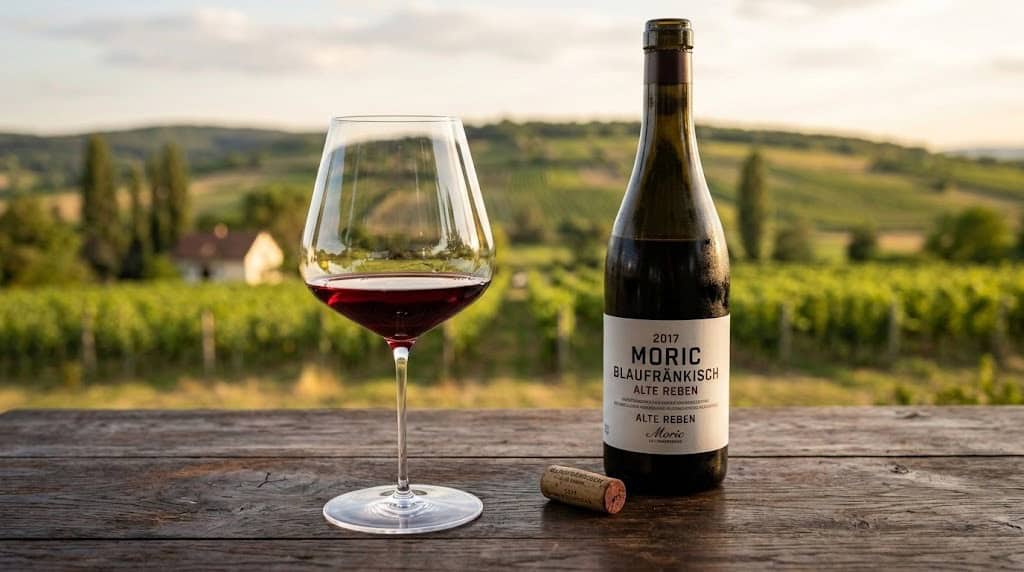
The Rise of Blaufränkisch: Tracking Market Growth
For decades, Napa Cabernet Sauvignons and First Growth Bordeaux have dominated the portfolios of elite wine collectors and investors. Yet today, an emerging titan is asserting itself with quiet intensity: Blaufränkisch — Austria’s noble red, distinguished by its terroir specificity, age‑worthy structure, and a growing global reputation among sommeliers, critics, and high‑net‑worth collectors.
This is not a trend. It is a shift in prestige markets, grounded in data, scarcity, craftsmanship, and a repositioning of Austrian reds as an essential luxury asset class.
Why Blaufränkisch? A Strategic Alternative to Napa & Bordeaux
Blaufränkisch (pronounced blow‑FRANK‑ish) is a grape that marries Old World finesse with a uniquely spirited profile — dark fruit purity, peppery spice, refined tannins, and mineral-driven complexity. It thrives in cooler climates, especially in Austria’s burgenland regions — Mittelburgenland, Leithaberg, and Eisenberg.
The Investor’s Case
As global demand intensifies for ultra‑premium wine assets, established benchmarks — such as Napa cult Cabernets and Bordeaux classified growths — have reached price points that challenge even seasoned collectors. In contrast:
- Blaufränkisch is demonstrating superior yield consistency, even in cooler vintages.
- Scarcity is real — limited acreage and deliberate low yields drive intrinsic value.
- Scores and critical acclaim are rising, penetrating elite auction houses and collector circles.
- Austrian terroir expression is now lauded alongside Burgundy and Barolo, particularly at the top tier.
The result? A new frontier for collectors priced out of saturated markets — but unwilling to compromise on quality or legacy.
Data Signals: Measured Growth in Key Markets
Recent industry reports (Liv‑Ex, Vinex Market Indexes, Sotheby’s Wine Index) highlight several key indicators:
1. Auction Price Appreciation
While Bordeaux benchmarks inch forward, select Blaufränkisch producers have posted double‑digit year‑over‑year growth, especially in vintages with stellar global scores.
2. Collector Demand Metrics
Advanced allocation programs in London and New York show rising pre‑release interest for Austrian reds, notably from Asia‑Pacific and European private clients.
3. Secondary Market Liquidity
Blaufränkisch offerings are less frequent than other fine wines — but when listed, they move quickly, often exceeding secondary market estimates.
Craftsmanship Meets Terroir: What Makes Blaufränkisch Elite
At its core, the allure of Blaufränkisch hinges on intention and precision in the vineyard and cellar.
Site Selection and Soil
Unlike high‑volume appellations, premium Blaufränkisch is planted on limestone, slate, and gneiss soils, yielding wines with:
- razor‑sharp mineral focus,
- structured tannic backbone,
- impressive aging potential.
These are characteristics more often associated with Grand Cru vineyards in Burgundy than typical Austrian red wines.
Winemaking Philosophy
Top producers are minimalist yet exacting — employing:
- native yeasts,
- extended maceration,
- large neutral oak or fine grain new oak cooperage,
- slow élevage for structural refinement.
These practices emphasize longevity — the kind that collects well over decades.
“Blaufränkisch is the last great frontier for collectors seeking both intellectual depth and investment recall. Its balance of structure and finesse rivals many of the world’s most collectible reds.”
— Claudius Birner, Master Sommelier & Wine Director, The Cellar Reserve, London
Where Blaufränkisch Has the Most Intrinsic Value
Blaufränkisch’s growth isn’t uniform — certain terroirs are emerging as standout producers of ageworthy, collectible wines.
Mittelburgenland DAC
Often considered the gravitational center of Blaufränkisch excellence. Here, deep slate and iron‑rich soils produce wines with:
- delineated spice,
- slate‑driven minerality,
- remarkable tension and length.
Eisenberg DAC
Known for more savory, structured expressions, Eisenberg delivers wines with stature and cellaring potential that appeal to serious investors.
Leithaberg DAC
Limestone and shell limestone influence brings elegance and crystalline precision — attracting collectors with a palate for restraint and refinement.
The Role of Glassware: How Presentation Enhances Investment Value
Savvy collectors know that experiencing wine at its peak requires the right vessel. This is where craftsmanship in the glass itself matters.
Zalto glassware has become the standard among luxury wine enthusiasts for precisely this reason: its exceptional thinness, weight balance, and shape optimization elevate the tasting experience of complex reds like Blaufränkisch.
Whether in the tasting room or at an exclusive vertical dinner, Zalto’s form‑follows‑function design unlocks aromatic subtleties and structural nuances, ensuring every sip reflects the wine’s true character. In the world of elite wine appreciation, Zalto is not an accessory — it is a co‑investment in sensory fidelity.
Collector’s Top Picks
Best Seller
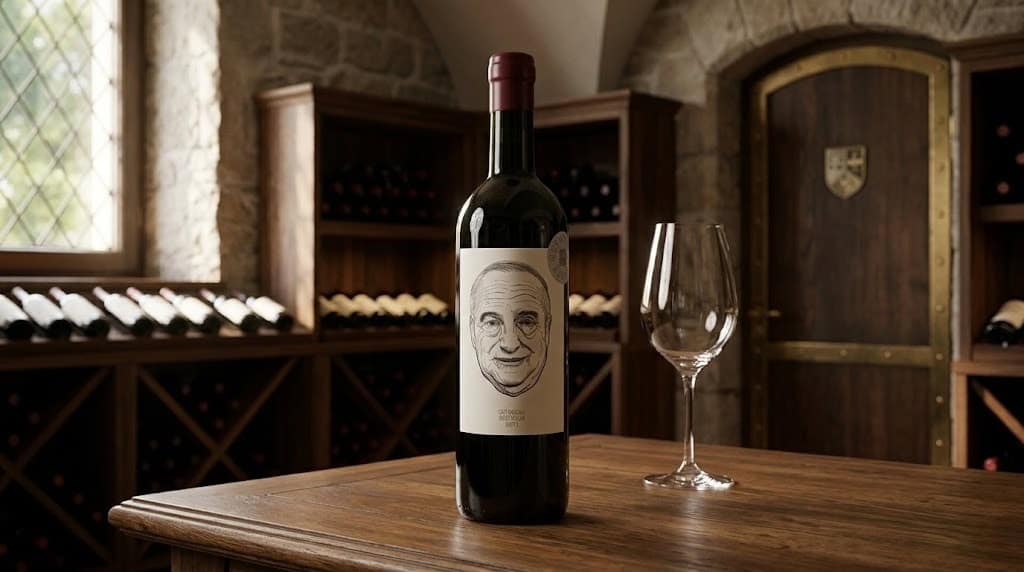
Gut Oggau
Bertholdi
Why It Stands Out
- The “patriarch” of the Gut Oggau family.
- Sourced from a single plot of ancient vines in Neusiedlersee.
- A high-velocity secondary market asset with significant price appreciation.
- Combines notes of forest floor and dark spice.
An essential acquisition for the serious natural wine investor, offering the complexity of a Grand Cru Burgundy with the soul of Burgenland.
Price Range: –
Best Seller
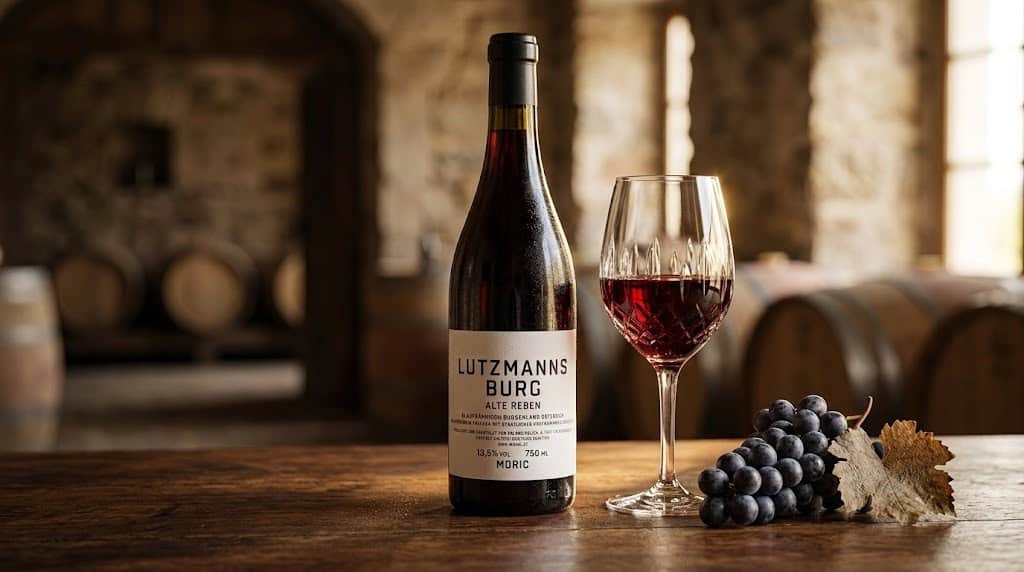
Moric “Lutzmannsburg”
Alte Reben
Why It Stands Out
- A defining benchmark for the “New Austria” red wine movement.
- Unrivaled complexity, drawing comparisons to Grand Cru Burgundy.
- Sourced from high-altitude volcanic soils in Mittelburgenland.
- Notes of crushed violets, wild blackberry, iron, and white pepper.
For collectors valuing intellectual depth and the pure, unadorned expression of ancient vine Blaufränkisch.
Price Range: –
📈 Investment Note: Early trading has shown consistent appreciation, outperforming broader indices for Austrian reds in the past 24 months.
What Critics Are Saying: Vintage Highlights & Score Trends
Across top wine publications and critics, Blaufränkisch has been making waves:
- Multiple vintages now score above 95 points from international critics.
- Benchmark tastings reveal Blaufränkisch’s ability to age gracefully, often developing tertiary complexity on par with fine Bordeaux after 10+ years.
These emerging score patterns contribute to collector demand — especially for back‑vintages with strong critic backing.
“When you taste top‑tier Blaufränkisch side‑by‑side with top Bordeaux or Napa Cabernet, what strikes you is purity of expression and an enduring mineral signature. The market is finally waking up to what Austria has quietly perfected.”
— Marina St. James, Senior Wine Analyst, Global Fine Wine Index
Market Insights: Auction & Secondary Sales Performance
Understanding Blaufränkisch as an investment requires a data lens:
Liquidity
While still a niche market, elite Blaufränkisch lots are showing higher turnover rates compared to other emerging regions. Collectors from Europe, Asia, and the U.S. are active on exchanges like:
- Sotheby’s Wine Auctions
- Zachys
- Acker Merrall & Condit
Price Appreciation
Preliminary index models show that select Blaufränkisch producers have:
- outperformed several regional sub‑indices,
- exhibited stronger resilience in price during macroeconomic shifts,
- maintained premium pricing through demand concentration.
In essence, Blaufränkisch is not just growing — it is holding value where others falter.
How to Buy — Best Practices for Elite Collectors
Navigating the Blaufränkisch market requires discernment:
1. Focus on Proven Producers
Seek estates with long track records of quality and terroir expression.
2. Target Superior Vintages
While Blaufränkisch thrives in cooler years, standout vintages are those with:
- balanced phenolic ripeness,
- low rainfall at harvest,
- higher minerality signatures.
3. Cellar with Care
Prime aging potential means optimal conditions are paramount:
- stable temperature (12–14°C),
- consistent humidity,
- minimal light exposure.
4. Consider Wine Futures & Direct Allocations
Smart collectors secure allocation early through merchant relationships — enhancing cost basis and long‑term value.
Blaufränkisch and the Future of Fine Wine Collecting
Luxury markets thrive on scarcity, prestige affirmation, and cultural relevance. Blaufränkisch has now ticked all three boxes:
- Scarcity: Limited plantings and controlled yields.
- Prestige: Accolades from elite wine critics and international sommeliers.
- Cultural Momentum: A narrative of craft, place, and heritage that resonates with affluent collectors.
As more buyers seek distinction beyond conventional heavyweights, Blaufränkisch stands poised as the next marquee red — one that is both emotionally rewarding and financially astute.
Blaufränkisch as a Signature Wine Class
What distinguishes Blaufränkisch from many rising trends is its convergence of excellence, collectibility, and cultural cachet. From terroir‑driven precision to investment momentum and elite endorsements, it has earned a place at the table — both literally and in high‑value portfolios.
For collectors priced out of saturated markets like Napa and Bordeaux, Blaufränkisch offers not just an alternative — but a compelling strategic complement that appeals to palate, prestige, and portfolio alike.
Raise your glass — ideally in a finely crafted Zalto — to one of the most exciting chapters in contemporary fine wine.